/ Education
Views: 931
Oborevwori, Asagba push for innovation as DELSU graduates 6,172 with 107 bagging first class at 18th convocation
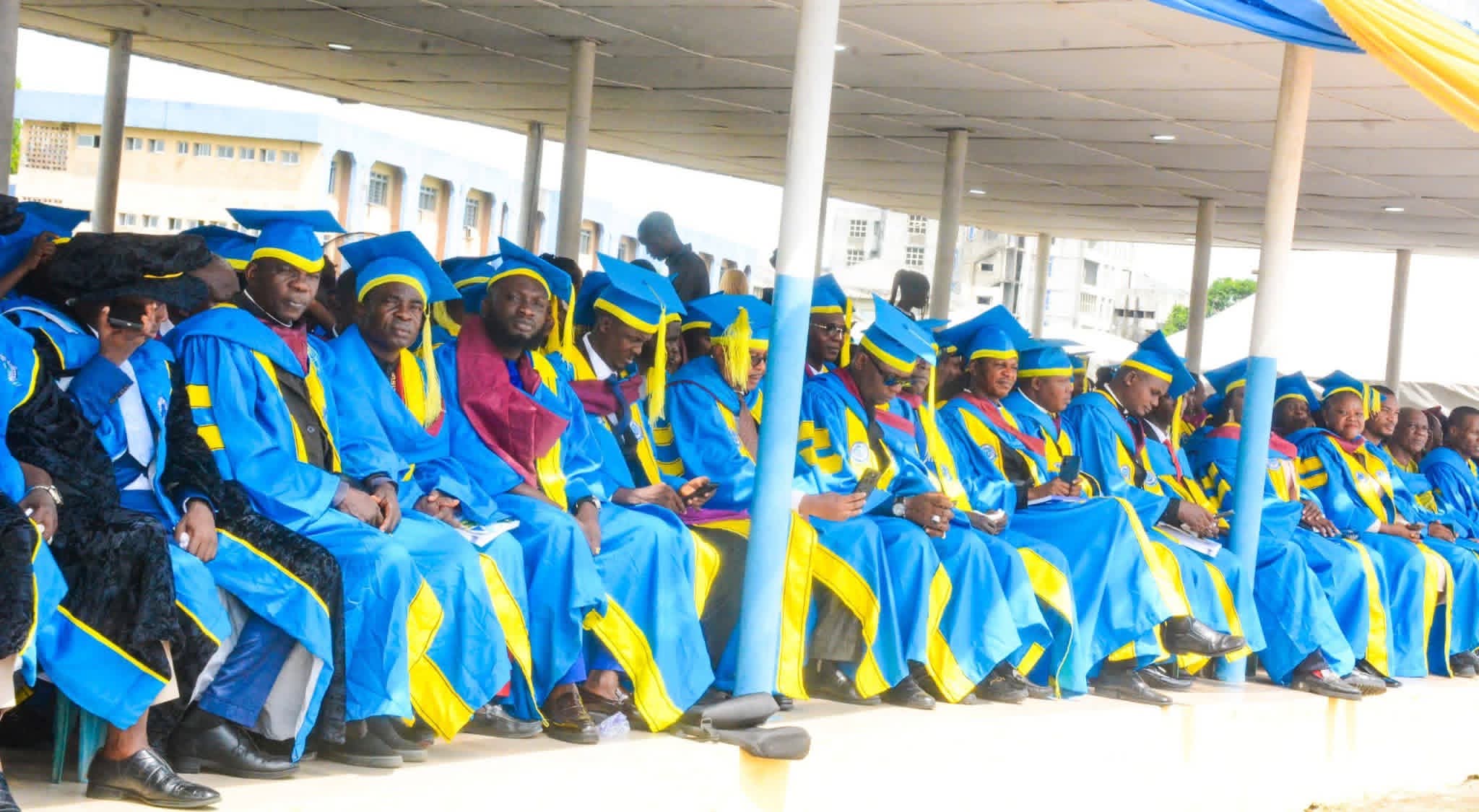
Abraka - Governor of Delta State, Rt. Hon. Sheriff Oborevwori, and the Vice-Chancellor of Delta State University (DELSU), Abraka, Prof. Samuel Ogheneovo Asagba, have charged graduates to embrace innovation, entrepreneurship and digital skills as critical tools for employment and job creation in a rapidly evolving global economy.
Speaking at the 18th Convocation Ceremony of DELSU, the Governor, represented by his deputy, Sir Monday Onyeme said the state government is repositioning tertiary education to produce graduates who are not only job seekers but job creators.

Oborevwori noted that the convocation marked the culmination of years of discipline, learning and character development, describing the 2025 graduating set as a reflection of the university’s commitment to academic excellence and societal transformation.
He emphasized that the future of education must be aligned with 21st-century realities, stressing that institutions must prioritize entrepreneurship, digital literacy and problem-solving skills.

“The world you are entering is highly competitive, but it is also rich with opportunities for those prepared to innovate and adapt. Our graduates must be equipped not just to seek jobs, but to create them,” he said.
The governor reaffirmed his administration’s commitment to the development of higher education through sustained funding, prompt payment of staff salaries and expansion of academic infrastructure, while calling for stronger collaboration between government, private sector and other stakeholders to sustain quality education.
In his address, Vice-Chancellor Prof. Asagba highlighted the growing reputation of DELSU as a leading institution, disclosing that the university was ranked the best state university in Nigeria and 12th overall in the country in the 2025 Times Higher Education rankings.
He described the convocation as a critical academic milestone that not only celebrates graduating students but also provides an opportunity for institutional reflection, policy review and strategic planning.
Asagba disclosed that a total of 871 postgraduate degrees were awarded during the convocation, including 181 Doctor of Philosophy (PhD), 477 Master’s degrees, eight MPhil and 205 Postgraduate Diplomas.
The Vice-Chancellor stressed the importance of aligning university education with industry needs, advocating what he termed a “classroom-to-industry approach” to bridge the gap between academic training and real-world application.
He noted that emerging technologies such as artificial intelligence and advanced automation are reshaping the global workforce, making it imperative for universities to upgrade laboratories, equipment and teaching methods to meet modern demands.
“It is only through our tertiary institutions that these new technologies can be effectively taught and domesticated. We must act now to ensure our graduates remain competitive globally,” Asagba said.
He also revealed that the university would confer honorary doctorate degrees on distinguished Nigerians, including HRM Enyi Friday Odini, Dr. Muhammadu Indimi and Olorogun Mrs. Grace Aghoghovbia, in recognition of their contributions to national development.
Additionally, the institution honoured Prof. Patrick Igbigbi with the rank of Professor Emeritus for his outstanding contributions to scholarship and the growth of the university.
Earlier, the Pro-Chancellor and Chairman of Governing Council, Gen. Alexander Ogomudia (rtd), commended the Delta State Government for its consistent support, noting that the stability enjoyed by the university is a product of strong collaboration between the government, management and staff.
He, however, called for increased investment in tertiary education, citing challenges such as inadequate infrastructure, staffing gaps and the need for modern research facilities.
Ogomudia stressed that universities remain the foundation for national development, urging stakeholders to support innovation-driven education capable of fostering industrialization and economic growth.
The convocation ceremony attracted top government officials, traditional rulers, academics and other stakeholders, as graduates were urged to uphold integrity, remain resilient and contribute meaningfully to society.