/ Metro
Views: 137
NELFUND Boss denies Financial Misappropriation, defends Loan Disbursement process
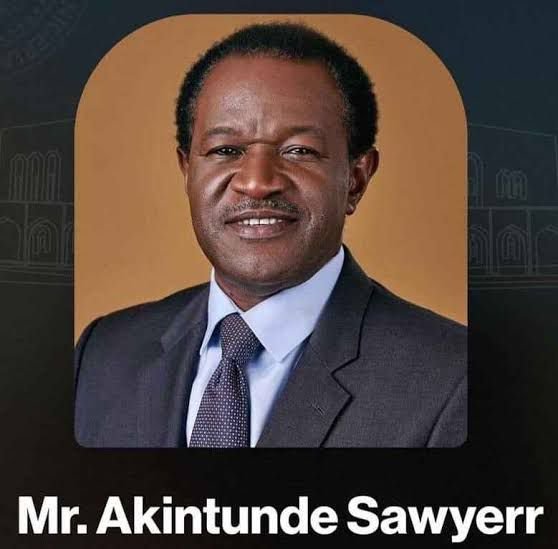
The Managing Director of the Nigerian Education Loan Fund (NELFUND), Akintunde Sawyerr, has dismissed allegations of financial misappropriation within the agency, insisting that there is no evidence to support such claims.
Sawyerr made the clarification on Monday during an interview with ARISE NEWS, where he explained that NELFUND required adequate capital to provide loans to students across the country.
According to him, the establishment of NELFUND was part of the Federal Government’s broader effort to redirect resources towards welfare programmes following the removal of fuel subsidy.
“There is no evidence of any financial misappropriation by NELFUND. The reality of it is that in order for people to take a loan, there has to be some capital they can draw on,” Sawyerr said.
He explained that funds previously used to subsidise certain areas of the economy were being redirected towards programmes designed to support Nigerians, including the student loan scheme.
The NELFUND boss also defended the agency’s financial disbursement process, rejecting claims that its operations lacked transparency.
He said payments to tertiary institutions and students were made electronically and were fully traceable.
Sawyerr disclosed that NELFUND recently transferred more than ₦1 billion to the University of Ibadan to support students, while upkeep allowances were paid directly into beneficiaries’ bank accounts.
He said the process made it difficult for funds to be diverted, as money moved electronically from the Central Bank of Nigeria to institutions or directly to students.
“The transfers of money are done electronically. It’s entirely traceable,” he said.
“The money leaves the Central Bank of Nigeria and goes either to the institution, the University of Ibadan, or in the case of upkeep, goes directly to the students in their bank accounts.”
Sawyerr questioned claims that the scheme lacked transparency, saying such conclusions appeared excessive and should be backed by a proper assessment of the agency’s operations.
He also defended NELFUND’s beneficiary selection process amid concerns about fairness and possible preferential treatment.
According to him, applications are processed electronically, with the system designed to determine eligibility based on established requirements rather than applicants’ ethnicity, gender, connections or political affiliations.
“We receive applications electronically. The system doesn’t recognise whether you’re male, female, whether you’re Igbo, Hausa, Yoruba, Fulani, Ibibio, or Ogoja,” he said.
He explained that applicants must meet requirements such as possessing a National Identification Number (NIN), a Joint Admissions and Matriculation Board (JAMB) registration number, valid admission and a bank account.
Sawyerr stressed that NELFUND does not operate a cash-based disbursement system, with funds transferred electronically to approved institutions or beneficiaries.
He maintained that the system was deliberately designed to be impartial and could not be influenced by personal relationships with officials of the agency.
“From our perspective, it’s completely agnostic as far as how people are chosen or concerned. It doesn’t care. The system doesn’t care whether you’re friends with the Managing Director or in-laws with the Executive Director. It doesn’t care,” he added.