/ News
Views: 845
"FROM HERITAGE TO PROSPERITY": UHS Unveils 8-Point Framework To Transform Urhobo Nation
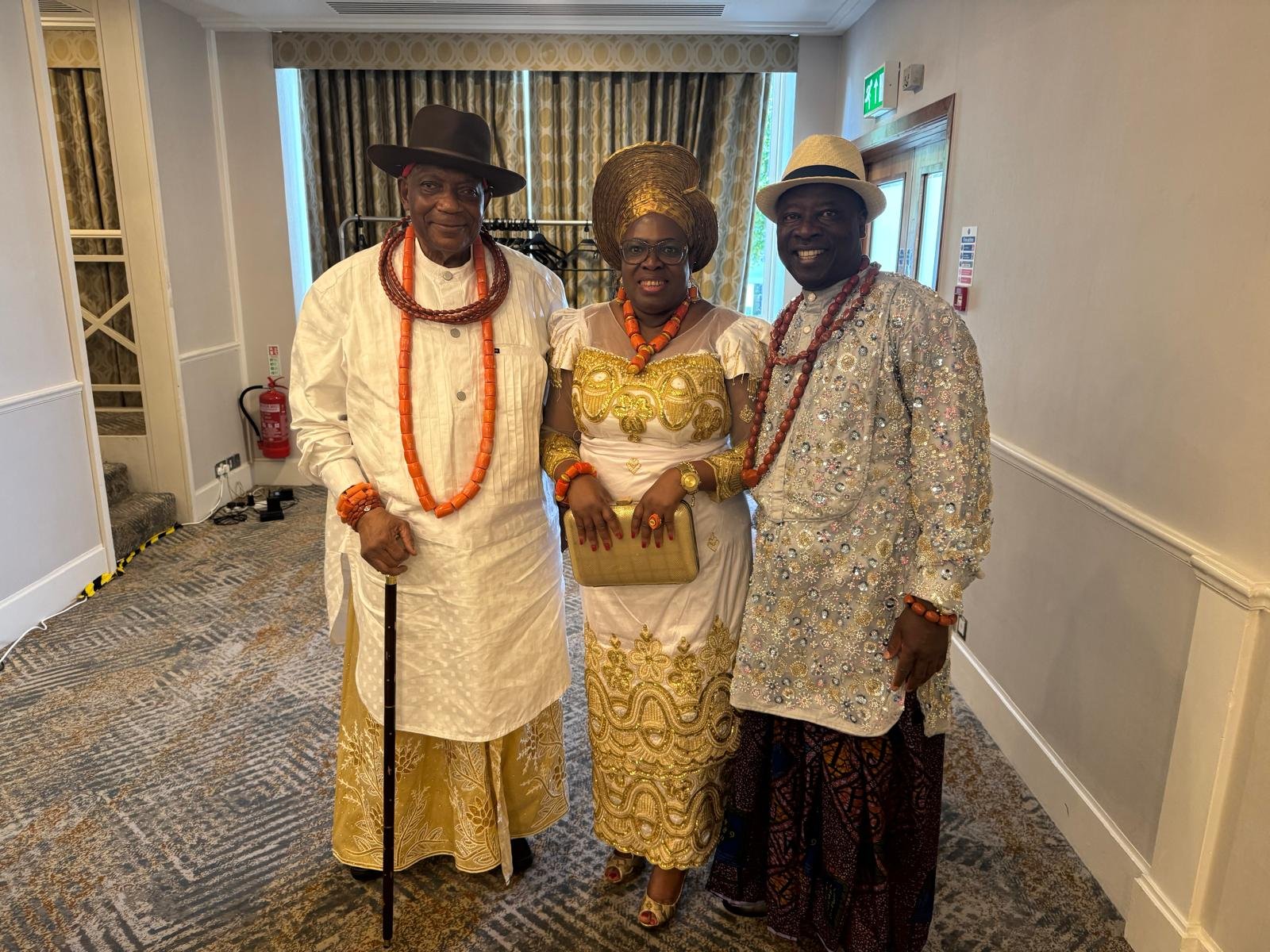
The Urhobo nation has been charged to move beyond cultural preservation and deliberately convert its heritage into sustainable prosperity through a new development framework unveiled at the 14th International Conference of the Urhobo Historical Society, UHS, in London.
Presenting a paper titled “From Heritage to Prosperity: A Strategic Framework for the Socio-Economic Transformation of the Urhobo Nation,” Chartered Manager and development strategist, Ms. Ochuko Dafiaghor, CMgr, MBA, proposed the adoption of “Strategic Heritage” as the philosophy to drive the nation’s future.
The conference, themed “The Urhobo Ethnic Nationality in Nigeria: Past, Present and the Future,” brought together royal fathers, scholars, captains of industry, and leaders of the Urhobo Progress Union, UPU, and UHS.
Dafiaghor argued that while preserving history, language, and traditions remains vital, every generation has a responsibility to also create new heritage for those coming after it.
She defined Strategic Heritage as “the deliberate process of preserving inherited heritage while intentionally creating new educational, intellectual, institutional, economic and cultural achievements that become the inheritance of future generations.”
To operationalize this, he introduced the concept of “Heritage Capital” — the historical, cultural, intellectual, and institutional assets of the Urhobo people — which he said must be mobilized alongside natural, financial, human, and social capital.
“Our greatest wealth lies not only beneath our soil, but within our people, institutions, ideas, and collective achievements,” he stated.
The centerpiece of the paper is the Strategic Heritage Development Model, SHDM, an 8-stage continuous cycle designed to translate cultural assets into prosperity.
The stages are: Heritage, Unity, Knowledge, Leadership, Innovation, Enterprise, Prosperity, Legacy, with Legacy feeding back into Heritage for the next generation.
According to Dafiaghor, the model addresses what he termed the “Urhobo Development Paradox” — a situation where the nation, despite its rich culture, resilient institutions, educated population, and global diaspora, is yet to achieve commensurate collective socio-economic development.
She cited fragmented efforts, weak institutional coordination, and inadequate investment in youth, innovation, and entrepreneurship as key challenges.
To translate the framework into action, Dafiaghor proposed “Vision 2050” — a long-term aspiration for a globally respected Urhobo nation built on four pillars:
● Education and Human Capital: Expand access to quality education, research, and scholarships.
● Innovation and Enterprise: Support startups, technology, and research-driven industries.
● Culture, Heritage and Environmental Sustainability: Preserve the Urhobo language and protect cultural and natural assets.
● Leadership, Partnerships and Global Engagement: Leverage collaboration between traditional institutions, government, UPU, UHS, universities, private sector, and the diaspora.
She assigned roles to key stakeholders, noting that UHS should provide intellectual leadership, UPU should offer strategic coordination, while government, private sector, and diaspora must provide policy, investment, and expertise.
In her closing remarks, Dafiaghor declared that future generations will judge today’s leaders not only by how they preserved heritage, but by the new institutions, knowledge, and prosperity they created.
“Let our generation resolve to leave stronger institutions than we inherited, greater opportunities than we enjoyed, and a more united and prosperous Urhobo nation than we found,” he said.
She concluded: “Heritage preserved gives a people identity. Strategic Heritage transforms identity into prosperity. Prosperity intentionally created becomes the heritage of future generations.”
The paper was well received by delegates who described it as a timely blueprint for repositioning the Urhobo nation for the next three decades.