/ News
Views: 1379
Senate Advances State Police Bill as Security Reform Gains Momentum
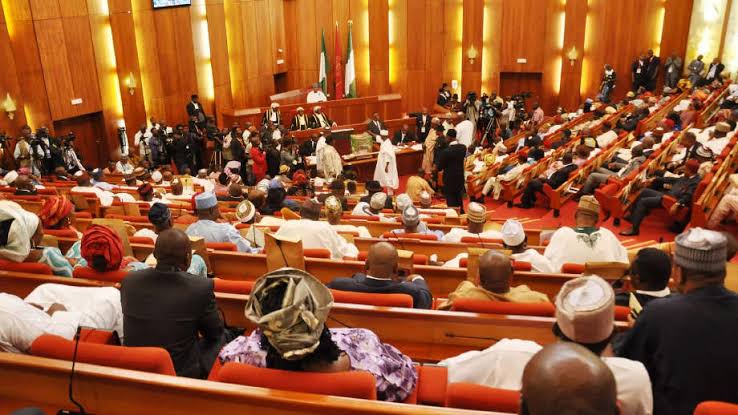
The Senate on Thursday moved a step closer to establishing state police across Nigeria as a constitutional amendment bill seeking to decentralise policing and empower states to manage their own security formations successfully scaled second reading.
The proposed legislation, widely regarded as one of the most significant security reforms in recent years, was subsequently referred by Senate President, Godswill Akpabio, to the Senate Ad-hoc Committee on the Review of the 1999 Constitution for further consideration.
Leading debate on the bill, Senate Leader, Opeyemi Bamidele, described state police as a necessary response to Nigeria’s escalating security challenges, arguing that the current centralised policing structure is overstretched and increasingly unable to effectively tackle evolving threats across the federation.
According to him, local police formations would significantly improve intelligence gathering, community engagement, and rapid response to crimes because officers are more familiar with local languages, cultures, terrain, and security dynamics.
“Modern policing relies heavily on intelligence rather than force. State police will significantly strengthen Nigeria’s intelligence architecture,” Bamidele stated.
The Senate Leader noted that Nigeria continues to grapple with terrorism, banditry, mass kidnappings, communal conflicts, cultism, armed robbery, pipeline vandalism, cybercrime, and other emerging security threats, stressing that a decentralised policing system would complement existing federal security efforts.
Under the proposed amendment, both federal and state police structures would operate concurrently, with clearly defined responsibilities, oversight mechanisms, and constitutional safeguards to prevent abuse.
The bill also seeks to transfer policing from the Exclusive Legislative List to the Concurrent Legislative List, allowing state governments greater participation in security management.
Addressing fears that governors could misuse state police for political purposes, Bamidele said the legislation incorporates multiple safeguards, including the establishment of State Police Service Commissions, federal oversight mechanisms, legislative confirmation of senior appointments, and constitutional procedures for accountability.
He maintained that the reform would strengthen rather than weaken Nigeria’s federal system.
“This amendment does not undermine national unity; it strengthens the federation by enabling each level of government to effectively discharge its constitutional responsibilities,” he said.
Several lawmakers threw their weight behind the proposal during the debate, with Senate Chief Whip, Senator Tahir Monguno, describing the bill as a timely intervention capable of providing a legal framework for regulating local security outfits and vigilante groups operating across the country.
Supporters of the bill argued that decentralised policing has proven effective in other federal systems such as United States, Canada, Australia, and Germany, where state and federal law enforcement agencies coexist and collaborate.
The bill's successful second reading marks a significant milestone in Nigeria’s long-running debate over state policing and reflects growing legislative consensus that comprehensive security reforms are needed to address the country's persistent insecurity.
If eventually passed and signed into law, the legislation could fundamentally reshape Nigeria’s policing structure by granting states greater responsibility for maintaining law and order while allowing federal authorities to focus on national security, terrorism, border protection, and interstate crimes.